
Prohibited uses
- Use related to illegal files, malware, phishing, or unauthorized access
- Use that infringes the copyright, trademarks, privacy, or other rights of third parties
- Spam, mass sending, impersonation, or excessive load on the service
- Transferring another person’s personal information without a lawful basis
- Obtaining download URLs, verification codes, or access tokens improperly, or circumventing recipient verification
- Unauthorized access to another person’s account or storage
Responsibility for file contents
Because encryption prevents the operator from inspecting file contents in advance, senders must confirm the rights and the purpose of the files they transfer. When entering recipient information, provide appropriate notice and obtain consent.
Reporting abuse
If you find abuse, rights infringement, illegal files, or similar, contact support@diotrans.app with the following information.
- The URL or other identifier of the transfer
- When you observed it
- A summary of the problem
If you belong to an organization, you can also report from “Report” in the app. Reports are reviewed by organization administrators.
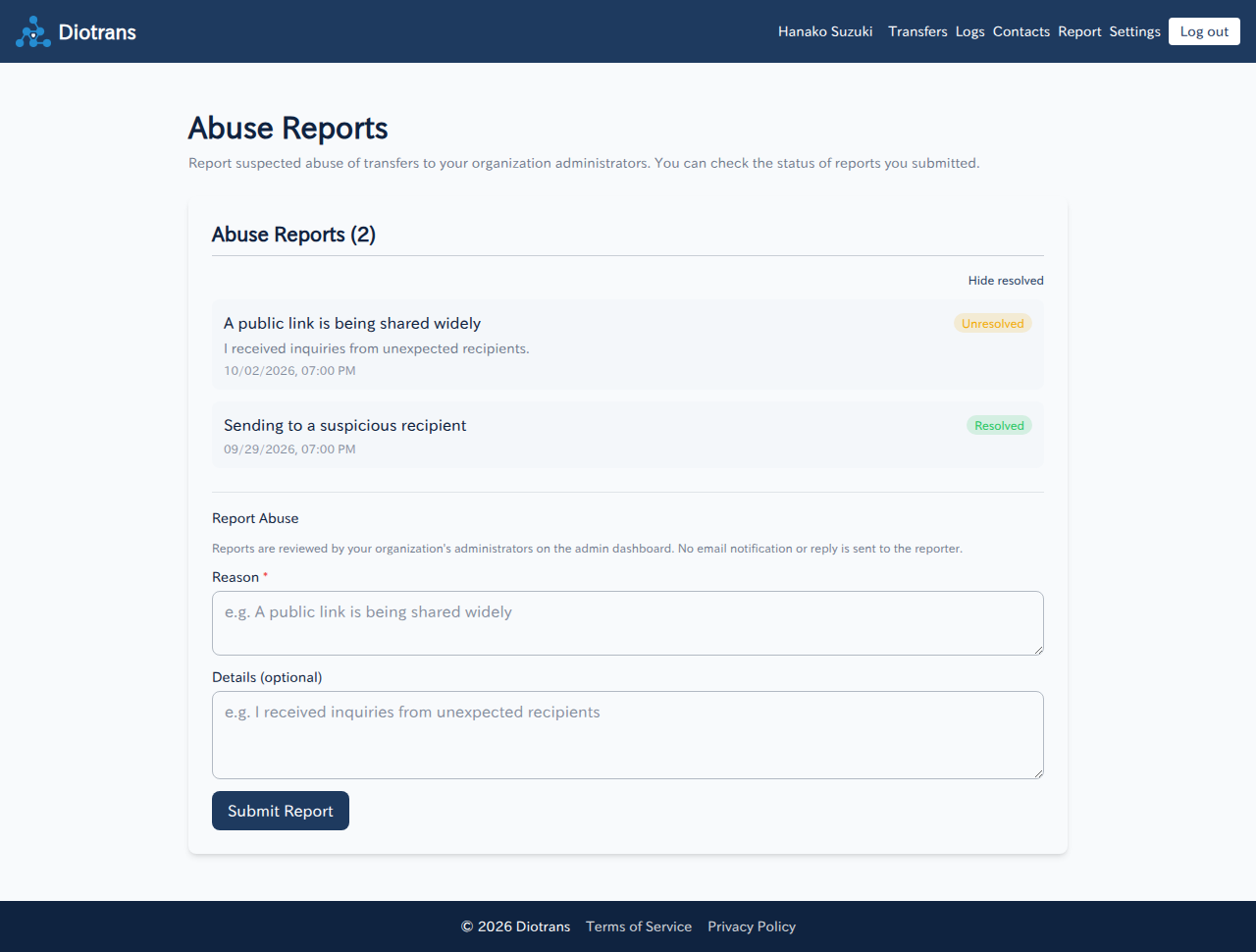
When we receive a report, we record it as an abuse report and investigate. Depending on the findings, we may delete transfers or suspend accounts. If we receive a legally binding request, we respond to the relevant authorities in accordance with laws and contracts, including deletion, suspension, or disclosure.
We may contact the reporter about the status or outcome. Reporter information is used only for investigation and handling.
Details
For the detailed list of prohibited acts, see the prohibitions in the Terms of Service.